

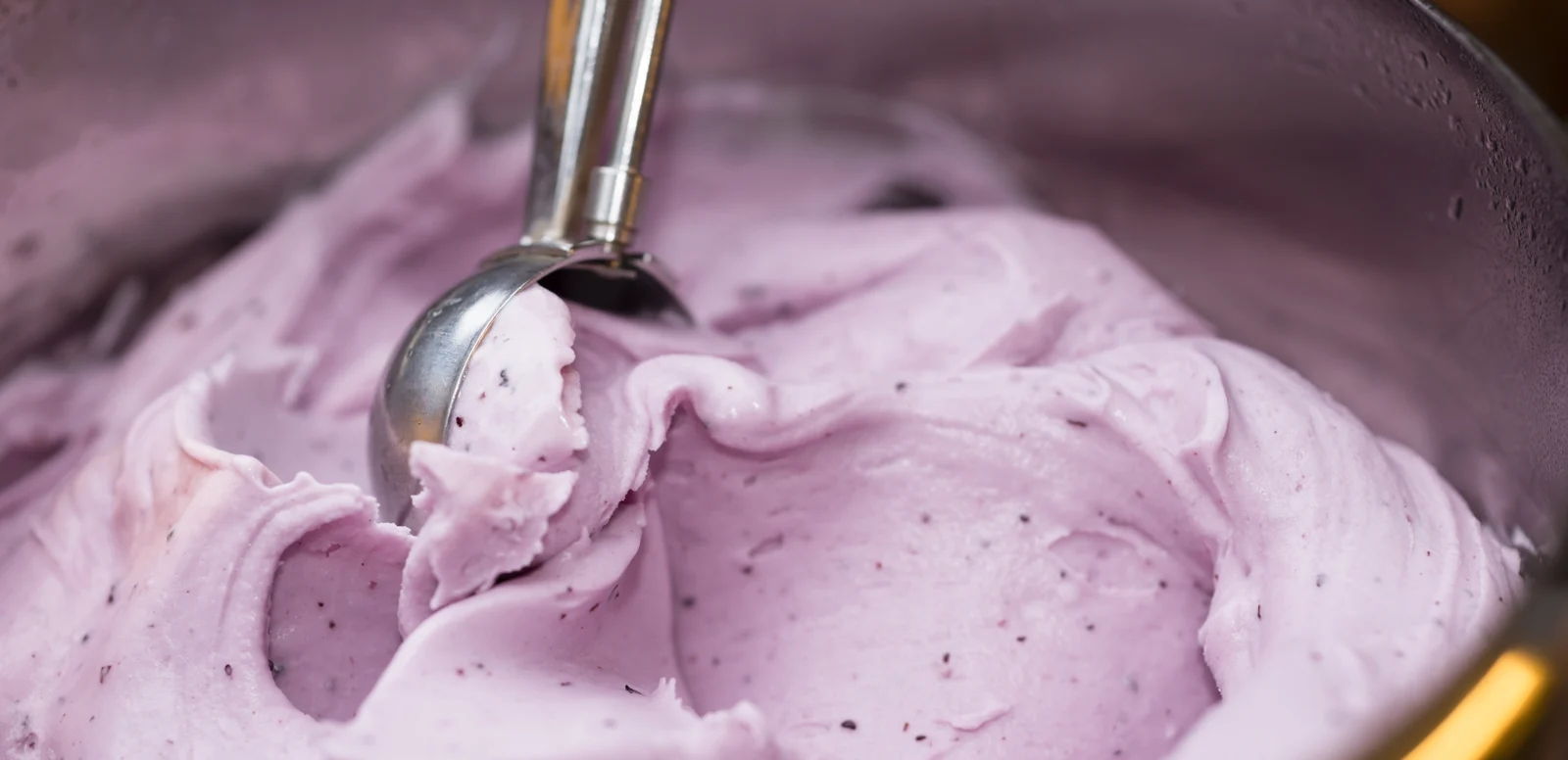
The science of Gelato and Ice Cream making started the very first day humans started experimenting with frozen dessert. Ice cream is an intricate concoction, embodying a remarkable complexity that transcends its seemingly simple frozen form. At its core, Ice Cream is a heterogeneous mixture comprising a variety of solubles, non-solubles and water. The addition of air and transformation of water into ice during the freezing process creates a delicate and smooth texture. The transformation of water into ice crystals is a pivotal aspect, dictating the overall consistency and mouthfeel. Balancing these components requires precision, as too much or too little of any element can drastically alter the final product. The intricate dance between solids, fats, air, ice, and water results in the beloved frozen treat that we aim for.
What is Ice Cream?
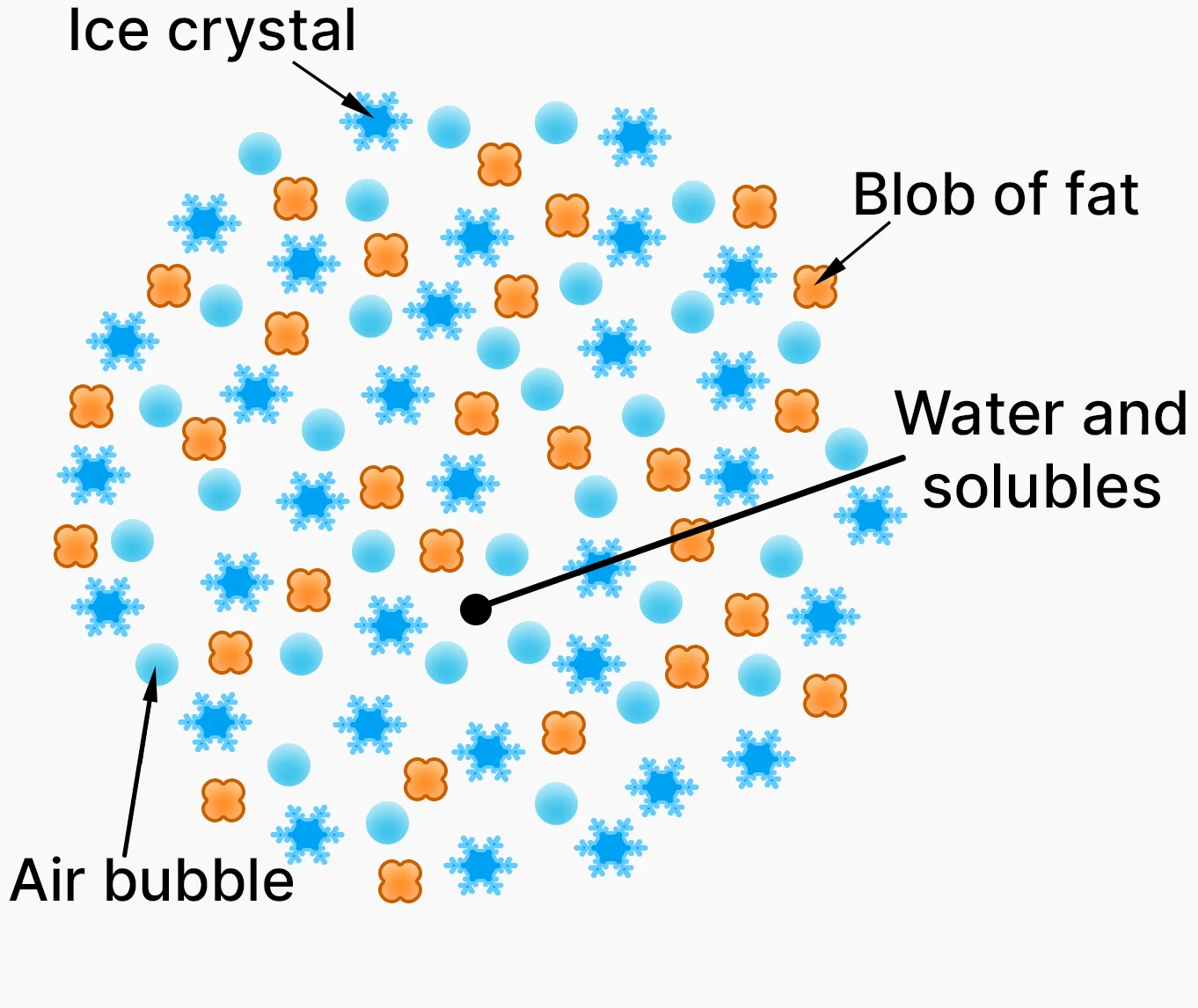
Prior to the freezing process an Ice Cream mix is heterogeneous. At the end of freezing process it contains four distinctive groups of elements:
- Water (mixed with all other solubles)
- Non solubles (mainly fat)
- Ice
- Air
What happened?
As the mix is chilled, water starts turning into ice. But it does so mainly without freezing anything else in the process. Ice crystals are formed as small blocks of pure water.
As the process goes on, there is gradually less water remaining in the mix and therefore the concentration of antifreeze elements (mainly sugar and alcohol) increases to the point that the rest of the water cannot freeze at all. It is this ratio of ice/water of around 70% (ice) / 30% (water) that we are trying to reach at serving temperature.
Throughout the process a crucial element is added to the mix: Air. The churning of the Ice Cream maker encapsulate tiny air bubbles in-between the ice and the remaining mix.
To achieve the right Scoopability at serving temperature the amount of antifreeze elements matters. A lot. They belong to two broad categories: Sugar and Alcohol. A fairly precise ratio of sugars against water needs to exist to reach that Goldilock percent of water frozen. Furthermore not all types of sugar have the same antifreeze power and a single ingredient (such as a fruit) contains different types of those said sugars. Balancing a mix for good Scoopability requires various steps that Gelato Maestro will do for you instantly.
Of course much more comes into play such as fat content, water content, lactose saturation and more. These parameters are also taken into account in Gelato Maestro to make sure your mix is right.
Not all sugars are equal
Sugars in ice cream not only add sweetness but also play a crucial role in making what an ice cream is by nature. You see, Ice cream is an oxymoron. It is a cream, which is by definition not hard, and it is ice, which is by definition hard. A tug of war is at play between the freezing temperature that wants to turn water into ice and sugars (or alcohol) that combat the process with their antifreeze powers.
In the world of professional ice cream makers, two acronyms stand out in particular: PAC and POD. PAC stands for “Potere Anti Congelante” in Italian, or Freezing Point Depression FPDF or Anti Freezing Power AFP in English. POD stands for “Potere Dolcificante” in Italian, or Relative Sweetness in English. Italians early on understood that not all ingredients, or sugars for that matter, have the same above-mentioned powers. As a base unit of measure table sugar or sucrose has been chosen:
1 PAC = 1 gr of sucrose diluted in 100 gr of water.
1 POD = 1 gr of sucrose diluted in 100 gr of water.
By using the PAC unit, it is possible to sum up the total Freezing Point Depression power contained in a mix. This serves to calculate the Scoopability quality of an ice cream.
By using the POD unit, it is possible to sum up the sweetness power contained in a mix, giving us the sweetness of a gelato.
To illustrate how important knowing the designated PAC values for different ingredients are, let’s take the example of Dextrose. Dextrose is a type of sugar that usually comes from corn or wheat, and it is almost identical to glucose. Dextrose has a PAC of 1.9, which means it has 1.9 times the antifreeze power of sucrose. That’s a big difference! It also has a POD of 0.7, which means it has 0.7 times the sweetness power of sucrose. That’s the reason why Dextrose is widely used in ice cream, as it gives a lot more flexibility to properly balance a mix.
These variations exist in all sorts of different ingredients. Fructose has the same properties as Dextrose and is found in fruits among other types of sugars such as glucose and maltose.
As you’ve probably guessed by now, knowing the total PAC and POD of a mix is crucial, and therefore knowing the PAC and POD of each individual ingredients is essential.
Water content
So we know about the PAC and the POD of the mix, great. Now will the Ice Cream end up the same if the water content is 60% for one mix and 90% for another? Of course not. With an equal PAC, the antifreeze power will have to “work” harder on a 90% water mix than a 60% mix. In a way its powers will be more diluted as the water content increases. As such knowing how much water the PAC will have to work on is also crucial. And since many ingredients contain water knowing the breakdown of all ingredients and their constituents is also essential! For example, a Watermelon can contain 94% water, while a Lady Finger Banana 69%. This will impact the Scoopability and texture of the mix if the PAC and POD are not adjusted.
Water is essential for the mouthfeel of the end product as it forms small ice crystals, a crucial attribute of a frozen dessert. Additionally, it encapsulates air bubbles, which play an important role in the formation of a pleasant ice cream texture.
Knowing the total water content of a mix is crucial, and therefore knowing the water content of each individual ingredient is essential.
Serving temperature
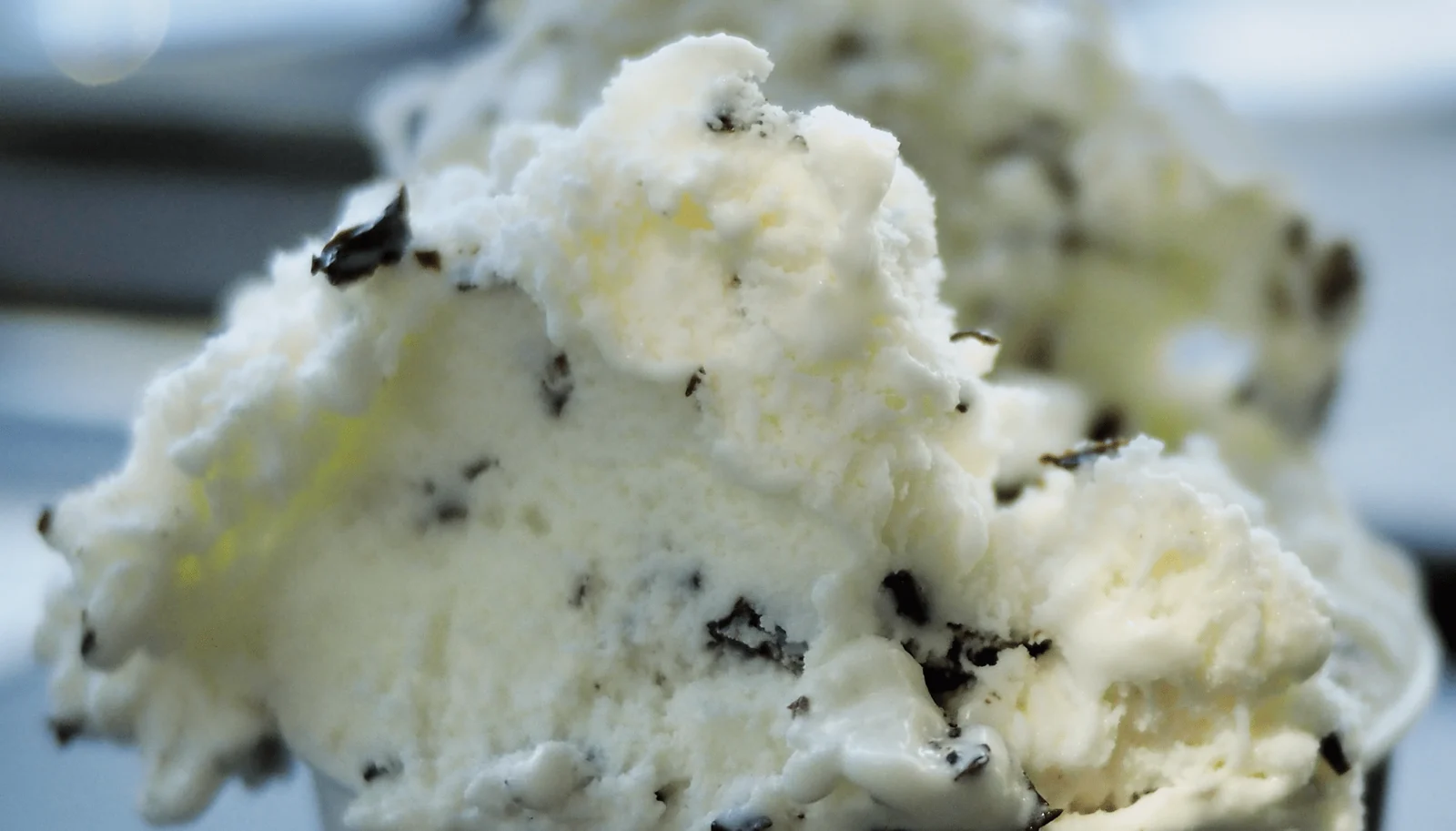
You may be curious about the choice of -13°C (8.6°F) as the serving temperature in Gelato Maestro, especially when your home freezer is typically set to -19°C (-2.2°F). The reason behind this is that -13°C (8.6°F) is considered the optimal temperature for savoring ice cream. If it’s colder, your taste buds might become numb, causing you to miss out on the delightful flavours. Warmer and the Ice Cream will be loosing its Ice in Ice Cream! Ensure to take your ice cream out of the freezer and allow it to warm up slightly before indulging. However, be mindful not to leave it out for an extended period, as this can lead to the formation of larger ice crystals when you return it to the freezer.